

Spoilers Below
Like many sequels to great films, the second installment of the Wicked Movie series, Wicked: For Good, had a lot to live up to. I walked into the early access movie premiere on November 17 with high expectations, as the marketing for the second movie was nearly just as strong as the first despite its lowered budget, and the two official and final trailers were very well-produced and quickly circulated on TikTok and Instagram with interesting fan predictions.
While the movie was just as visually interesting as the first, it lacked new elements that would significantly set it apart from the first movie, and it relied too much on emotional aspects to make it more compelling. Due to this, the movie didn’t quite meet or surpass my high expectations.
The movie reprises Ariana Grande and Cynthia Erivo as the main characters, Glinda and Elphaba, respectively. The first movie aligns with the first act of the Wicked musical, while the second movie aligns with the second act. The second movie follows Elphaba in hiding as the entirety of Oz is looking for her because the Wizard of Oz and Madame Morrible branded her as “The Wicked Witch of the West” due to her reluctance to help the Ozian government oppress animals within their society.
While she is in hiding, Glinda and Fiyero continue to become public figures in Oz and even become engaged as a way to keep up appearances and protect Elphaba. Elphaba comes out of hiding and reconciles with the Wizard under the impression that he will stop his targeting of animals. During the wedding between Glinda and Fiyero, Elphaba finds out that animals are still being targeted, leading to Elphaba escaping again, the Wizard being expelled from Oz, and eventually Elphaba leaving Oz with Fiyero at the end.
In the second film, the movie picks up almost exactly where the last movie ended. This makes it extremely confusing for viewers who might not remember the events from the first movie or may be watching the second movie as their introduction to the series.
The most compelling aspect of the movie was its successful thematic continuity with the first film. Themes like equality for all beings regardless of species remained central to the plot, becoming even more developed with additional scenes featuring the animals of Oz and Elphaba’s continued commitment to helping them. This continuity was also woven into the song choices, which included short references to the previous movie with additions of “No One Mourns the Wicked,” “Popular,” “Dancing through Life,” and “What is This Feeling.” For the large fanbase that the initial movie was able to create, these references elicit a sort of nostalgia that was very evident throughout my theater, with the audience singing along, laughing, and erupting into applause. Despite this, many aspects were, to put it plainly, slightly boring and unnecessary.
Firstly, I found it somewhat upsetting that the storyline pitted the two main female characters against each other due to their love for a man. At the beginning, Glinda and Fiyero maintained a one-sided relationship, and upon reuniting with Elphaba, Fiyero abandons Glinda to be with her. This led Glinda to accuse Elphaba of stealing Fiyero from her, which undermines the aim of the story: to be progressive and anti-authoritarian. At one point in the movie, Elphaba and Glinda even got into a physical altercation as Glinda caused Elphaba’s sister, Nessa, to be killed because she felt that Fiyero and Elphaba had betrayed her, and consequently told the Oz authorities to use Nessa to force Elphaba out of hiding.
Seeing this, I began to apply the Bechdel test on the movie, a test that measures women’s representation in film through testing if the female characters in a film have a conversation without mentioning a man. Throughout the movie, I couldn’t find a single instance of this, with all of the interactions between the female characters somehow referencing Boq, Fiyero, or the Wizard. The entire point of the movie was the bond between two women and how it evolved, yet that bond was completely changed by men on multiple occasions. I found this choice to be very disappointing as the film focused on different things than the musical to strengthen the portrayal of the two main characters, which could’ve also been done in this aspect of the plot.
Moreover, what drew me and many other Wicked fans to the first movie were the exciting extended musical and dance sequences, with upbeat songs like “What Is This Feeling?” and “Popular” gaining 153 and 178 million streams on Spotify as of November 18, 2025, respectively. While I was aware that the overall plot of the second movie was much more serious and included fewer big musical numbers, I felt slightly disappointed at the majority of ballads in the film, which felt much less energetic and captivating in comparison to the variety of song types in the first movie.
The movie used relatively the same cinematography techniques as the previous installment. What stood out more in this movie wasn’t the cinematic shot techniques themselves, but how the shots were paired together to create compelling sequences that helped craft a stronger narrative. For example, during Glinda and Fiyero’s wedding, the music and shots quickly change from the luxurious wedding to the unsettling secret room filled with animals stuck in cages that Elphaba finds, contrasting the appearance that powerful figures in Oz put on with the actuality of the discrimination that animals face in Oz. While interesting, I would’ve enjoyed more unique shots, different from the ones in the last movie; however, I do understand that the initial movie did set a high standard with the introduction and use of fun cinematic techniques.
In the first movie, the plot seemed more interesting, with Elphaba and Glinda meeting, Fiyero falling in love with Elphaba, Elphaba discovering her powers and the reality of life for animals, and much more. In the second, it seemed like fewer key events occurred, with about three large events that seemed to drag out for the entire movie, and a lot of references to the first movie.
Despite this, some parts of the overall film seemed to improve since the last installment.
While a small change, Elphaba’s styling significantly improved. In the first movie, I found Elphaba’s hair and outfits to be slightly boring as her braids were very uniform and stiff, and her outfits seemed to all look the same. In this movie, she was given a more trendy hairstyle of boho braids, which are loose and unfinished curly braids that produce a more free and loose vibe that matches Elphaba’s character development as she cares less about fitting in and conforming to a society that discriminates against its citizens. She was also given many more visually appealing outfits, which was interesting, as even though she was limited to dark colors to contrast with Glinda, she had many more outfits, including the long, flowy, dark blue dress that she wears in the final scene.
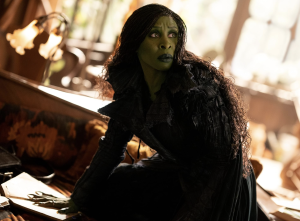
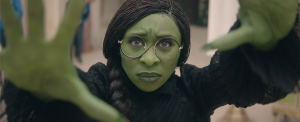
Additionally, the colors of the movie seemed to pop much more. The film introduced the yellow brick road and brought back the vibrant poppy fields from the first movie, which both reference the original The Wizard of Oz movie. The reference to the 1939 film also included an appearance of Dorothy and her dog, Toto. These additions added depth to the film as Dorothy, who typically is depicted as an innocent and kind figure, acted as a minor antagonist in the story who contributed to Elphaba’s ostracization in Oz, making Elphaba seem more resilient.
Overall, Wicked: For Good proved to be an enthralling film that was deeply intimate and emotionally engaging, yet as a sequel, it lacked the expansion on the successful points in the original movie, making it unable to stand on its own. While I would suggest the movie to a casual viewer, I would advise loyal Wicked fans to walk into the movie with slightly lowered expectations.
Wicked: For Good opens nationwide on November 21, 2025.


Edward Mitchell • Dec 5, 2025 at 8:48 pm
You are so wrong on your review.
The audience I saw it with loved every moment of it including myself.
The audience appluded the film as the credits were going out.
I give WICKED ***1/2 STARS
I give WICKED FOR GOOD **** STARS.