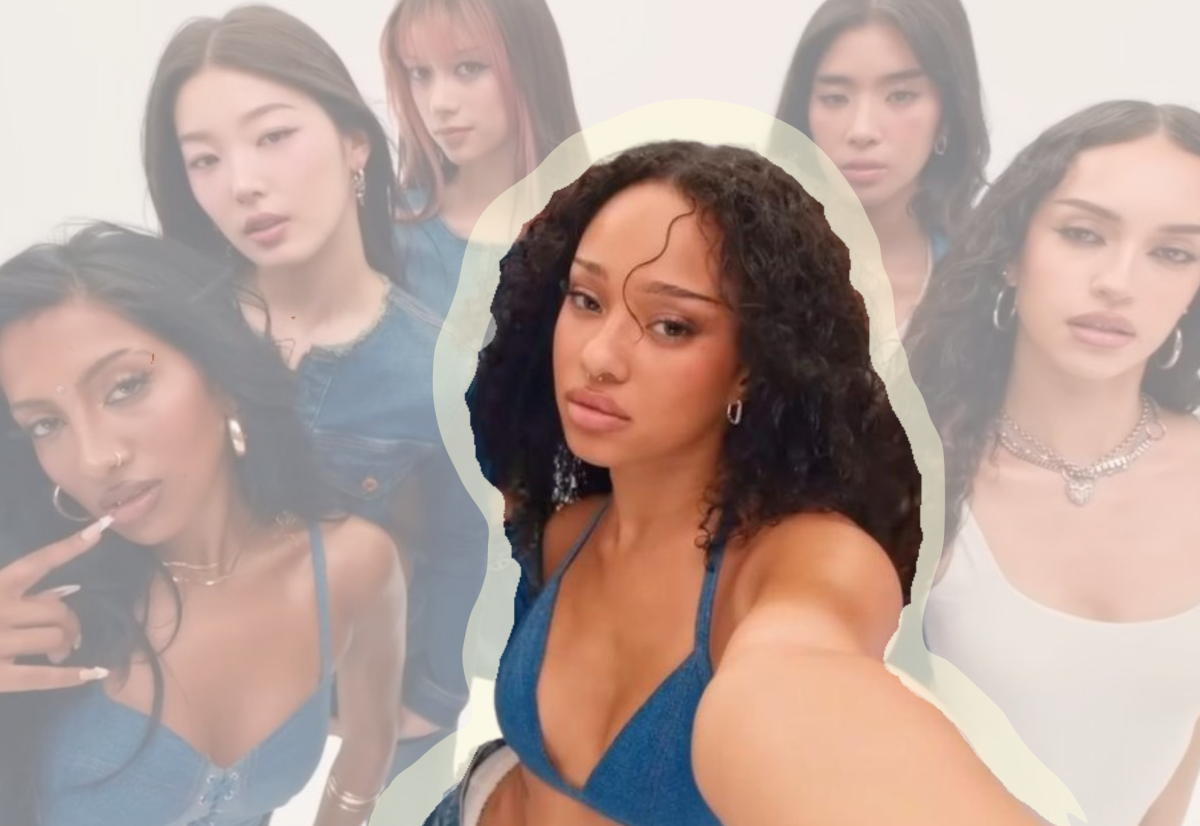
Growing up, there was no “KATSEYE” type of group in my life. To put it simply, living in America, no girl group completely made up of people of color ever existed in my childhood. So when I first heard about the concept of KATSEYE, I was overjoyed to hear about a girl group that had so much representation. This was the type of thing I had dreamed about as a kid — a pop group made up of girls who actually looked like me, had the same background, and were people I could look up to.
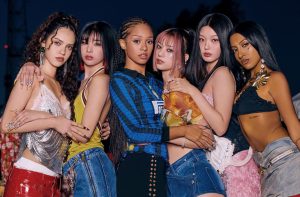
However, the group has had recent allegations of underlying racism in the group’s label, specifically with star member Manon Bannerman of Swiss-Ghanaian descent, directly following her hiatus announcement in February 2026. HYBE and Geffen Records, the labels behind KATSEYE, both put out a vague statement on social media announcing Bannerman’s hiatus, citing her “health and wellbeing” as the driving factor behind her leave. Bannerman confirmed the hiatus on her own account as well.
To me, Bannerman’s decision to step back from the group and go on a personal hiatus reveals more than just the personal challenges of being in the limelight; it reflects the issues of racism and the mistreatment of girls of color within the music industry, especially with girl groups owned by larger companies. I, can’t help but think that there is some form of racial discrimination hiding behind the group’s strong branding of being a “global diverse girl group,” especially with Bannerman’s subtle hints to fans of her difficulties being a minority in the industry leading to her taking a break.
Fans have alleged that Bannerman likely faced discrimination in the workplace, citing her recent likes of posts that allude to Bannerman being treated poorly due to her racial identity. It’s crazy to think that the “visual” of KATSEYE, a girl who HYBE and Geffen Records were using to hopefully attract audiences and represent more girls across the globe, is actually being mistreated due to underlying racist bias.
Bannerman has subtly fueled these allegations, liking an Instagram post by user @thesimplysimone that discussed how Black girls like herself have been mistreated by their labels due to systemic racism. The caption of the post reads, “another Black girl subjected to racism and label mistreatment yet again,” with thousands of users pointing out how Bannerman had liked the post. Bannerman has reportedly since unliked the post on social media.
KATSEYE was built by HYBE and Geffen Records in many ways to commercialize the diversity the girls brought to the group. Representing a variety of ethnic backgrounds and upbringings in the pop group’s makeup, KATSEYE is marketable through its international appeal — girls across the world can relate to the group and see themselves in the artists and their music. The members are from four different countries, and they all contribute to the global market that HYBE and Geffen Records seem to be targeting, high on diversity and therefore high on profitability.
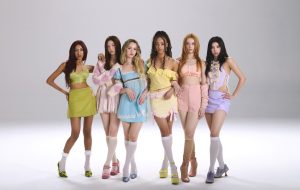
While there is nothing wrong with emphasizing the group’s diversity, I can’t help but see its strategic publicity methods as more than just an honest increase in representation. I find that the branding of KATSEYE to be a “global girl group,” whose name, KATSEYE, literally tries to represent the group’s diversity, to be disingenuous and performative, given that allegations of racism and mistreatment of members have run rampant with the record.
While Bannerman provides KATSEYE with a variety of talents, such as her great vocals and strong dancing abilities, her role in the group was quite literally to be the group’s official “visual.” In the K-pop industry, the “visual” represents the “it girl:” the attractive centerpiece of a group with a great stage presence and star power. Bannerman is frequently placed in the center of photoshoots, choreography, and promotions as a result of her role. Because of this, the owner companies of KATSEYE seem to reap the benefits of her Swiss-Ghanaian descent in their branding. Her look is an essential part of KATSEYE’s “global girl group” and diversity narrative.
Many believe that Bannerman is just being used for the group to have a more diverse outlook and therefore receive even more international popularity, but it is actually being treated very differently by the industry.
TikTok user @ameenhalee says, “What is representation without protection?” She goes on to say that Manon is being used as “a talent, as a black face, but her experience is much different than the other members.”
For context, Black K-pop idols are rare. Those who have tried to break into the industry often faced racism and discrimination from others in the industry and from the public. Support and allyship are limited and quiet. Although KATSEYE does not identify as a K-pop group, HYBE is a South Korean company that is behind K-pop groups such as BTS. KATSEYE still uses HYBE’s K-pop-esque systems to run its major operations, songwriting, directing, and publicity, meaning that the group is likely plagued in some ways by such stereotypes that the K-pop industry is known to have against people of color.
Silence on social issues has plagued the K-pop industry for years. The industry stayed relatively silent on global movements like Black Lives Matter, despite the heavy influence of Black artistry and culture in many aspects of their work. I think it’s great that the K-pop industry is inspired and influenced by artistry beyond Asia. However, I find it hypocritical that an industry that samples and takes inspiration from Black culture not only doesn’t publicly recognize issues of racism that exist inside of their operations, but also doesn’t seem to support their idols personally.

Additionally, Bannerman has faced racist backlash from the public since her days as a contestant in The Debut: Dream Academy, a hit competition show whose winners would eventually become the six members of KATSEYE today. Marked as “lazy” and “incompetent” by users online, Bannerman received incredible amounts of hate that often had racial undertones after she missed rehearsals during the show due to illness that other members did not receive. Bannerman stated in an interview with “The Cut” that “being called lazy, especially as a Black girl, is not fair.” HYBE and Geffen Records have not put out any statements regarding the racist hate that Bannerman or other KATSEYE members have faced, nor have they made any effort to try to protect them.
HYBE and Geffen Records essentially control the inside and outside of KATSEYE, from the group’s overall sound and style to the very songs they sing. The girls in KATSEYE perform songs written by external producers and songwriters. While buying songs and demos for artists to perform is a common practice in the music industry, I think this accurately reflects the type of control that HYBE, Geffen Records, and larger companies have over groups like KATSEYE. Without HYBE and Geffen Records, there would be no KATSEYE, as the group literally relies on the companies in virtually every respect.
In this sense, many fans have speculated that the members of KATSEYE, including Bannerman, can’t speak out on this issue because of the backlash and repercussions they would receive from HYBE and Geffen Records if they were to do so. Their main livelihoods seem to rely on the company; therefore, the power dynamic between the girls and the label controls how they can express their experiences to the public.
We still don’t know the truth of the issues going on with Bannerman’s hiatus, and I doubt that we ever will. However, I think that it goes without saying that racism continues to exist in the music industry, especially in spaces where there are clear majority and minority races like in the K-pop industry. The perspective that KATSEYE fully embraces all facets of its diversity seems to be false; there are obvious underlying issues in the group that aren’t explicitly told to the public, but still exist regardless.