There’s a line in Bad Bunny’s song “DtMF” that doesn’t sound revolutionary until it hits you.“Debí tirar más fotos de cuando te tuve.” In English, this translates to “I should have taken more photos when I had you.”
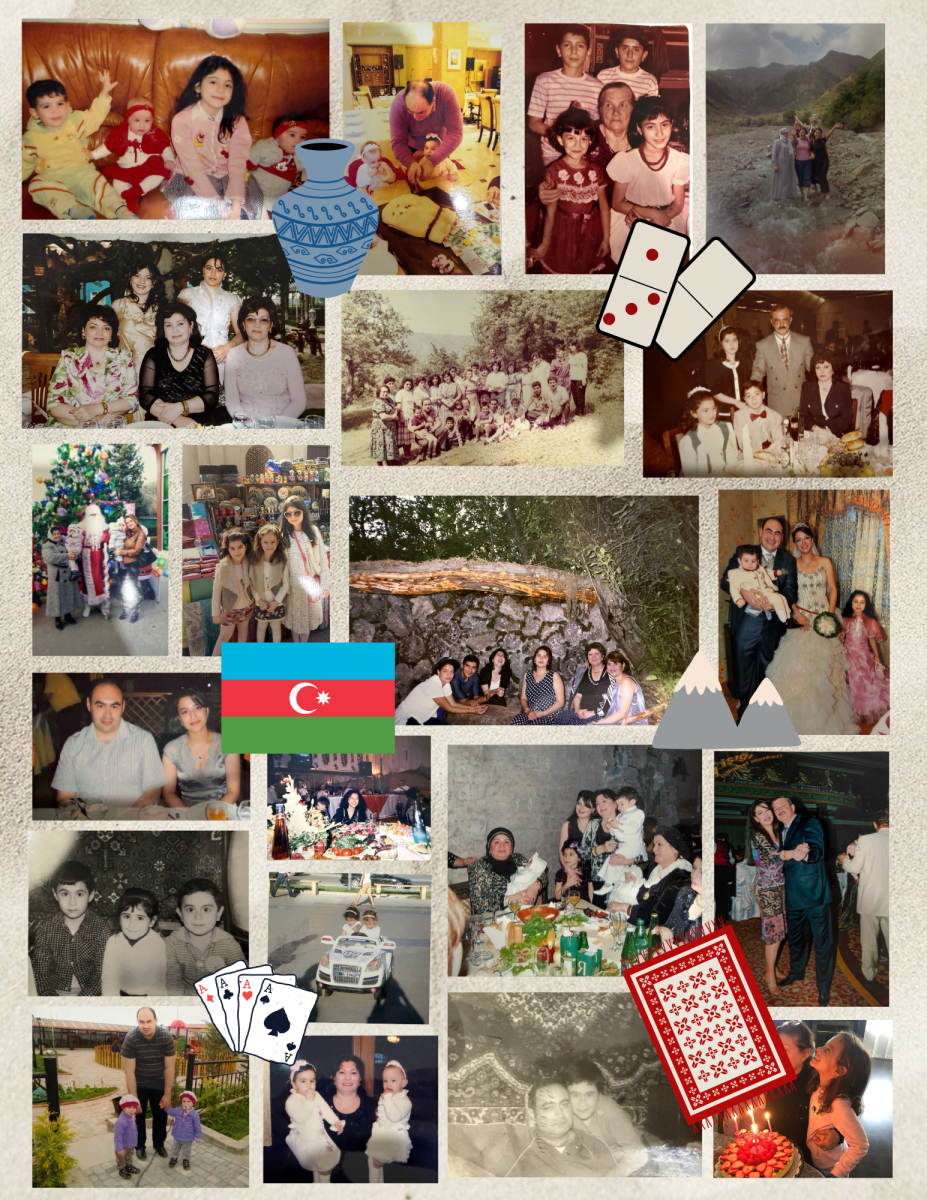
On the surface, it’s a breakup song. A man drunk in Santurce, the largest barrio in San Juan, is missing a lover, wishing he had documented their time together more carefully. But peel back the layer of reggaetón beats, and what emerges is something far more profound: a meditation on displacement on the unbearable weight of what we fail to preserve before it’s taken from us. This isn’t just Bad Bunny’s story about Puerto Rico. It’s also my story about Azerbaijan, about grandparents an ocean away, about belonging in a place you barely lived in but somehow still grieve for.
Bad Bunny isn’t just mourning a relationship. He’s mourning an entire way of life that’s slipping away from Puerto Rico, and by extension, from every person who’s ever had to leave their homeland.
The song opens with a sunset in San Juan. Not just any sunset, but one that “those who leave” will miss. It’s a seemingly simple observation that carries the weight of decades of Puerto Rican retreat.
Bad Bunny never lectures. He doesn’t need to. Instead, he catalogs what’s lost: nights “that just don’t happen anymore,” dominoes with his grandfather, the sound of batá drums in the street, bomba, and plena (a traditional Afro-Puerto Rican music style) echoing through neighborhoods. Here, as my dad recently helped me realize, the corillo (the tight circle of friends) is slowly dissolving as everyone scatters to wherever economic necessity takes them.
“Ojalá que los míos nunca se muden,” he pleads. In translation, “I hope my people never move.”
It’s a prayer he knows won’t be answered.
I understand this prayer in my bones, even though I’ve never set foot in Santurce.
I grew up American, which means I grew up with an ocean between me and the parts of myself that matter most. My grandparents are in Azerbaijan, a country I know through phone calls that always feel too short, through the smell of food that can’t be replicated in a New Jersey kitchen, through a language that sits on my tongue like something half-remembered from a dream.
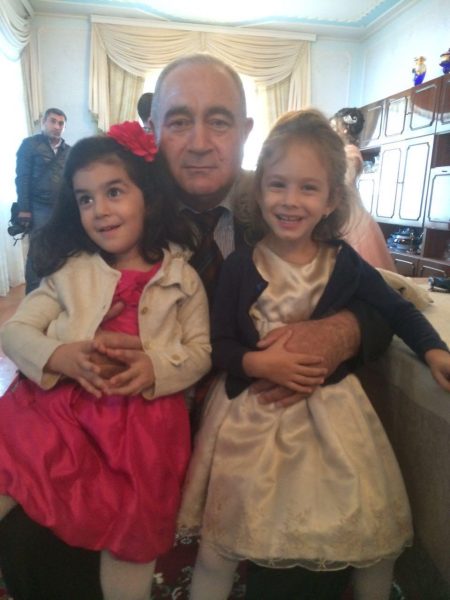
When Bad Bunny sings about playing dominoes with his grandfather, I remember my grandfather’s patience when he taught me how to play cards, the rules I can no longer fully recall, the way he’d let me win sometimes, and the smile he gave me when I finally got it right. I remember walks through Baku, Azerbaijan, neighborhoods where everyone seemed to know him, where he’d greet shopkeepers by name, and where I’d hold his hand and feel like I belonged to something vast, old, and important.
When Bad Bunny sings about wanting to go back and look into his lover’s eyes one more time, I think about my grandmother’s loving eyes. I remember how she’d give me dough to play with while she cooked.
I remember her letting me raid her makeup, watching in the mirror as I painted myself into someone who I thought was glamorous and grown-up, and her pink, shiny lipsticks that turned me into a tiny, clumsy version of her elegance. I remember drawing in her clothes, playing dress-up in fabrics that smelled like her perfume, flowers, and something sweet. She never rushed or scolded me for making a mess. She just let me play at being her, and maybe she knew even then that I’d spend the rest of my life trying to hold onto those moments.
And the markets. The little shops below their apartment building, where my grandfather would take me, where the babushkas behind the counters would pinch my cheeks and give me homemade cookies.
“Debí tirar más fotos de cuando te tuve.”
“I should have taken more photos when I had you.”
Except the photos wouldn’t capture it anyway. You can’t photograph your grandmother’s embrace, the way the afternoon light falls through Baku, the capital of Azerbaijan, or the sound of your grandfather’s laugh when you finally beat him at cards.
You can’t capture the casual intimacy of being known by every shopkeeper, of walking streets where your family’s history is written into the buildings themselves, of existing in a place where you don’t have to explain who you are because everyone already knows.
This is where my dad says that Bad Bunny’s love song becomes a protest anthem.
Because this story — of people forced to choose between staying home and surviving, of cultures slowly eroding under the weight of economic necessity, of children growing up displaced from their roots — this story is everywhere. It’s Syrian refugees in Berlin trying to explain to their German-born children what Aleppo used to smell like. It’s Venezuelans in Colombia and Haitians in the Dominican Republic. It’s Puerto Ricans in Florida. It’s me in New Jersey, trying to explain to my white friends why I feel homesick for a place I’ve never lived, and why I grieve for grandparents who are still alive but impossibly far away.
Bad Bunny doesn’t need to explicitly name the forces that have bled Puerto Rico dry. The personal is political. When he raps about a couple of friends who already have kids and “aren’t about chains anymore,” about a generation that’s matured past flashy materialism into valuing “las cosas que valgan la pena,” the worthwhile things, he’s describing what happens when displacement forces you to recalibrate what matters.
Family. Culture. Community. The traditions that connect you to something older and truer than yourself. These are things that matter. These are also things that global capitalism, climate change, and failed immigration policies are systematically destroying.
There’s a particular cruelty in being a citizen of one place while your soul belongs to another. Puerto Ricans are U.S. citizens, but treated as perpetual others; close enough to be exploited, distant enough to be forgotten when hurricanes hit, and the lights go out for months.
I am American. I have an American life, American education, American opportunities. I also have grandparents whose voices sound older every time we speak on the phone, a culture I access like a tourist in my own heritage, a language I speak with a ‘white’ accent that marks me not quite from there to people who look like me.
The math doesn’t work. You can’t be whole in two places at once. But you can’t be whole in just one place either, when half of yourself is an ocean away.
“Vamos a disfrutar, que nunca se sabe si nos queda poco.”
“Let’s enjoy ourselves, because you never know if we’re running out of time.”
The urgency in that line hits differently when you realize it’s not metaphorical. There is a slow erasure of people, not through violence but through economics, through borders and immigration quotas, and the brutal calculus that my grandma says the government challenges: you can have opportunity, or you can have home, but you cannot have both.
Near the end of “DtMF,” Bad Bunny gathers everyone for a photo. “Métase to’l mundo, to’l corillo, vamo.”
“Everybody get in, the whole crew, come on.”
It’s a moment of frantic preservation. Trying to capture something before it scatters, trying to prove that this moment existed.
I think about this every time I video-call my grandparents. Every time I ask my grandmother to teach me a recipe I should already know, every time I practice Azerbaijani words with my American accent, I try to hold onto something slipping through my fingers.
I’m taking the photos now, a decade too late.
Trying to document in memory what I failed to preserve in the moment. But memory is unreliable. Things are slipping away, and my grandparents won’t live forever to remind me of what I’ve forgotten.
Bad Bunny’s genius makes us feel the weight of these ordinary moments, making them feel irreplaceable. Not because they are extraordinary, but because they’re ours, and because forces larger than us are determined to take them away.
“DtMF” resonates globally because it does what the best art always does: it makes politics intimate.
It takes the horror of displacement and translates it into something we can feel: regret, longing, the ache of wanting to go back and hold on tighter to something we didn’t know we were losing.
The song is a love letter to every place that people are being forced to leave. To every grandmother whose stories might die with her because her grandchildren speak a different language now, or live in a different country now.
“Debí tirar más fotos de cuando te tuve. Debí darte más besos y abrazos las veces que pude.”
“I should have taken more photos. I should have given more kisses and hugs whenever I could.”
It’s too late for some things. But maybe the work now is to recognize what we still have before it becomes another thing we mourn.
To call our grandparents.
To learn the recipes.
To ask about the card games before it’s too late.
To take those photos while we still can.
Because Bad Bunny is right when he says, “Nunca se sabe si nos queda poco.” We never know if we’re running out of time. The only honest response to that uncertainty is to love harder, remember fiercer, and refuse to let the things that matter slip away.
The work of preservation, of resistance, of refusing erasure, is still ours to do.
We just have to decide it’s worth doing before it’s too late to matter.