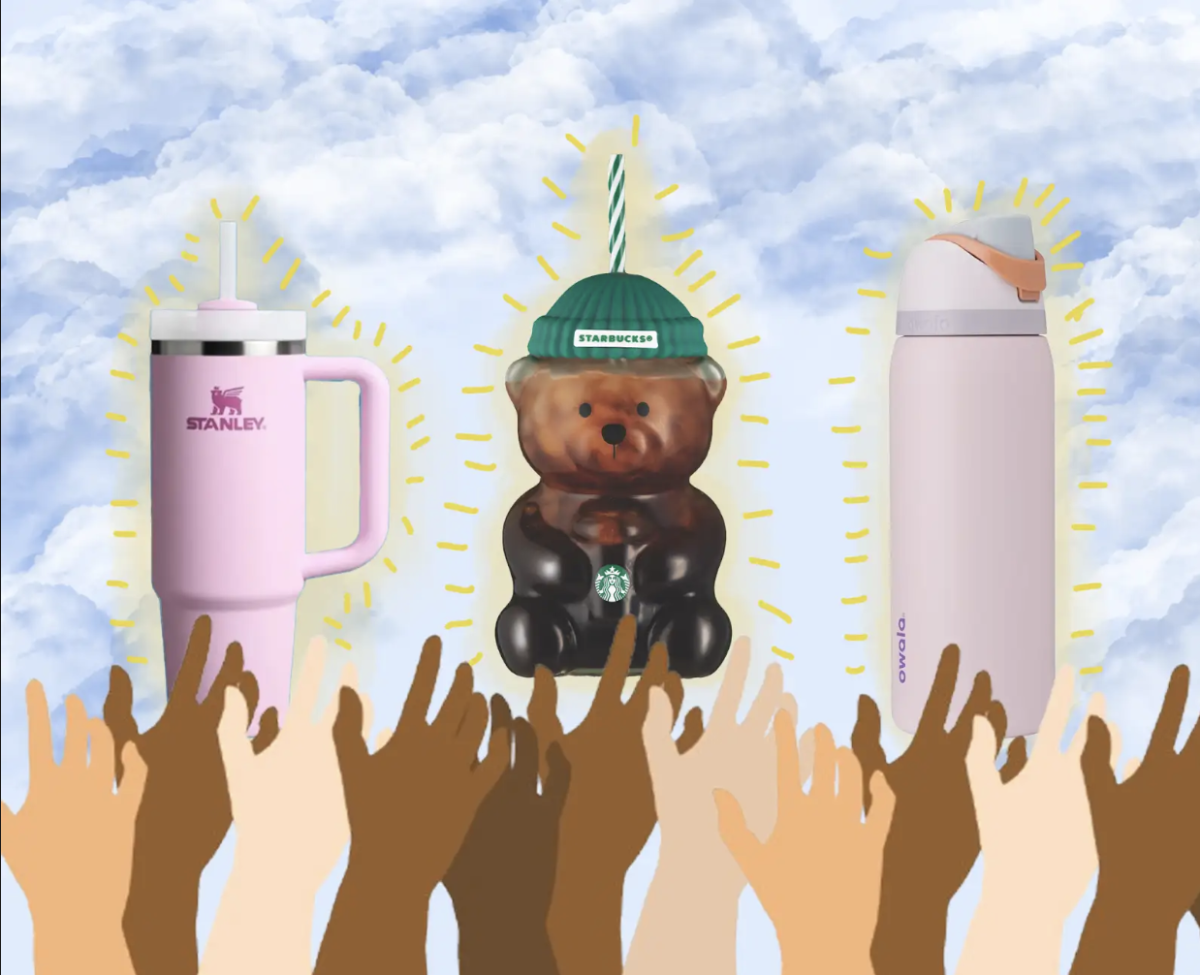
On Thursday, November 6, Starbucks released a new line of merchandise for the holiday season, including pink Owala water bottles, Hello Kitty merchandise, and the Bearista Cold Cup — a 20-ounce cup shaped like a bear. The response to this release included long lines of people camping in front of the Starbucks store, with some arriving as early as 4 a.m., and the cups being instantly resold for as much as $500. Twenty days later, the demand for the cups stayed strong. Such responses to items as simple as cups reflect a broader trend of consumerism that has been amplified by social media platforms like TikTok, which I believe may have a significant impact on personal identity.
As a Starbucks Barista, I have become increasingly aware of how far people are willing to go to buy the products they see promoted on social media.
On the day of the cup’s release, long lines formed outside my store with people waiting for the bear cups, of which each Starbucks store received no more than four. For the first few days following the release, the store phone constantly rang with customers demanding information about whether we had the cup, to which everyone received a “no” answer.
Interestingly, at the same time as the release, union stores at Starbucks were on strike because of poor wages and unfair labor practices. Additionally, many people online have shared that they are participating in a Starbucks boycott for their union-busting policies. Because of what seemed like thousands of people against Starbucks, I was surprised that so many people across the country came together to buy an arguably overpriced glass cup simply because it was trending online.
I am very familiar with customers walking up to the register and showing me a TikTok video with ingredients for a specialized drink. These moments are mostly endearing, as customers enjoy experimenting with their drinks and drawing inspiration from others online who have personalized their orders. However, relying heavily on TikTok or Instagram influencers to shape buying habits might influence how people see the need for certain items in their lives.
According to an analysis published in the Frontiers in Psychology Journal in 2022, there is a positive correlation between poor buying habits and negative consumption behaviors on social media, such as compulsive, impulsive, and conspicuous buying.
This connection was clear in the rise of Stanley Cups in 2021 and Hydroflasks in 2019. Brands and products that had a small audience for a majority of their existence rapidly grew in size simply due to their use as a fashion accessory or statement piece. As someone who has bought both of these cups during the height of their popularity, the “statement” aspect of these cups heavily hinged upon a collective understanding of what was “in” at the moment, and thus changed our perception of the role a simple cup may have in our lives.
Despite all of this, wanting to fit in and purchasing items that may feel slightly disconnected from oneself to do so isn’t a new concept. What is a new concept, though, are microtrends: hyper-specific trends that are often catalyzed by influencers and pop culture. Before the advent of social media, trends were not able to appear, spread, and disappear at the rate they do today, mainly because trends often spread through physical and mass media at that time.
Because of this, the rapid creation and revival of old trends is a defining factor of Gen Z, causing many to feel a need to fit in through participating in them. While the need to “keep up with the crowd” is not often a direct motivation for such purchases for many, I have observed that it is a subconscious response to the attention that the item is getting and the subsequent attraction to the item that would likely not happen without the internet attention. The grip social media has on your day-to-day lives gives you the illusion of choice, while in actuality, you are doing what you are told.
For me, the problem lies less within the act of buying the cup and following a trend, but more within the inability of many people who overuse social media platforms to be conscious of their true desires and necessities. The Bearista Cold Cup is not just a cup; it’s a reflection of the society consumerism has created, where it is normal to completely disregard your personal preferences in hopes of perfectly curating an identity to show to others.