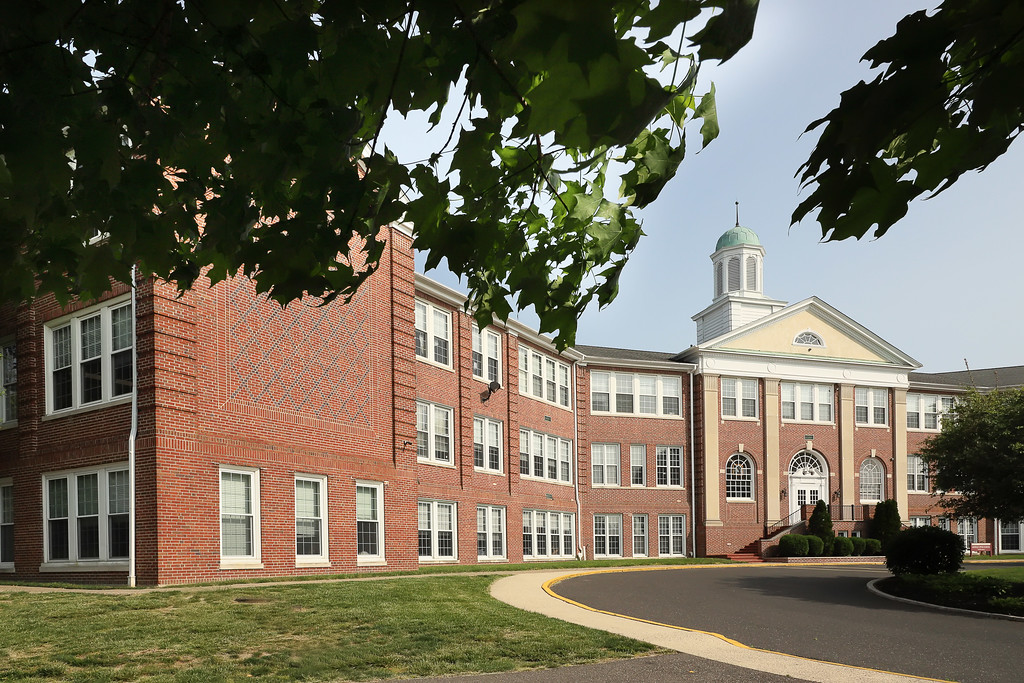
MFS has opened new gender-neutral single-stall bathrooms in the basement and second floor of the main building. These gender inclusive bathrooms give students new options alongside the existing traditionally gendered bathrooms. After more than eight years of planning, the long-awaited bathrooms have been in use since the start of the 2025-26 school year in September.
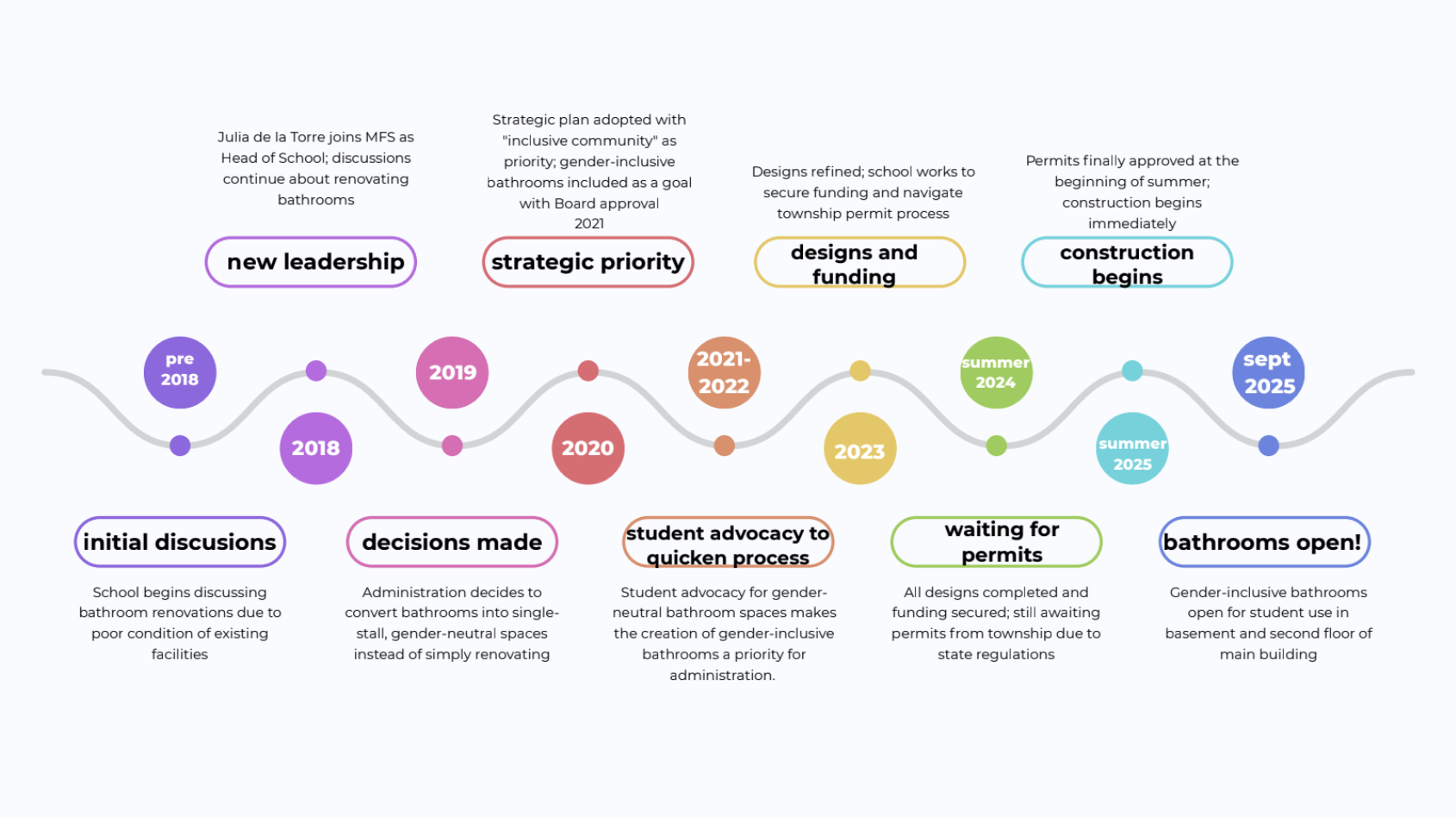
According to Head of School Julia de la Torre, the conversations about these bathrooms began before she came to MFS in 2018. When she arrived, the school was already discussing renovating the bathrooms, which were in poor condition. During her first year, the administration decided that instead of simply renovating the boys’ bathrooms, they would convert the bathrooms into single-stall, gender-neutral spaces.
“When I joined the school, we were on board that we needed to redo those bathrooms,” said de la Torre. “Sometime in my first year, I want to say, is when we decided instead of just renovating boys’ bathrooms, we were going to renovate them as single-stall bathrooms.”
The project gained momentum in 2020 when it was included in the school’s Strategic Plan as part of the “Inclusive Community” priority.
“When the board says something’s a priority, it gives you more space to prioritize a project,” de la Torre explained.
However, two major obstacles delayed construction: funding for the expensive project and navigating New Jersey state regulations.
“The state of New Jersey has a lot to say on how many bathrooms of which gender a school needs, or any institution needs,” de la Torre said. The state requires institutions to maintain a certain number of designated boys’ and girls’ bathrooms based on the population they serve. Converting bathrooms to single-stall ones meant the school no longer had traditionally labeled bathrooms, requiring extensive work with the township.
“We had to go through a huge process with the township to get permission to do this project and to make sure that we were still in compliance with the right number of bathrooms,” de la Torre said. “That process, and getting permits to do the construction, took years.”
The proposal was brought up in Agenda in 2022. According to current co-Agenda Clerk Ali Sabir, who attended the Agenda meeting in the DHC his freshman year, this proposal faced mixed reactions, including pushback from community members who felt the plan was unfair to boys who wanted their own bathroom space. Eventually, former Clerks and Affinity Group leaders met with de la Torre, to emphasize the importance of the bathrooms. By 2022, student advocacy helped streamline the plan to convert the boys’ bathrooms into gender-neutral bathrooms.
By the summer of 2024, the school had completed all designs and secured funding but was still waiting on permits from the township. The permits finally arrived at the beginning of summer 2025, just as construction began.
Finally, in 2025, the construction was completed at the beginning of the school year and passed inspection in the fall of 2025.
Sabir said the bathrooms live up to their promise.
“I think they’ve done a really, really good job,” he said. “These bathrooms really are super useful for everybody, just like they promised they were going to be. They ensure a lot of privacy, and I have seen wide utilization across grades and across the school community.”
“I think they’ve done a really, really good job,” he said. “These bathrooms really are super useful for everybody, just like they promised they were going to be. They ensure a lot of privacy, and I have seen wide utilization across grades and across the school community.”
For students like Rex Barnett ’27, the LGBTQ Affinity leader, Transgender and Gender Non-Conforming Affinity leader, and Pride Club officer, the change has made a significant difference to their everyday lives.
“[The new bathrooms] have been amazing,” said Barnett. “It’s made the process a lot simpler, [and it is] something you don’t have to worry about because you have that privacy.”
Barnett emphasized that the bathrooms serve more than just one group of students.
“It’s not just for people like me. It’s for the whole community,” Barnett explained. “Some people go to the bathroom to fix their hair or whatever. They want to do that in private. So gender inclusive bathrooms aren’t just for gender queer people. They’re for the whole community. People can have bathrooms where they can just go in peace.”
Alex Bienstock ’28, Transgender and Gender Non-Conforming Affinity leader, said the new bathrooms have changed his experience using the restrooms.
“Overall, I’ve had a much more pleasant experience with the gender-inclusive restrooms than I’ve had with the previous restrooms,” said Bienstock.
Bienstock continued, “I have more privacy and feel much more secure.”
Before the gender inclusive bathrooms opened, Bienstock often avoided using the restrooms at school.
“There would typically be a group of people hanging out in the restrooms during break, lunch, passing periods, etc.,” he explained. “This usually makes me avoid using the restrooms at school, but now I have a place where I don’t need to worry about that.”
For Bienstock, learning about the bathrooms at the beginning of the year gave him hope.
“Learning that these restrooms were being built at the beginning of the year gave me more hope that the school has been working towards being more inclusive,” he said. “As a gender non-conforming student, this is something I’ve wanted to see in the school since I transferred here. I’m incredibly grateful that this is now a reality.”
“As a gender non-conforming student, this is something I’ve wanted to see in the school since I transferred here. I’m incredibly grateful that this is now a reality.”
Julia Messina ’28 said she was surprised when she first heard the school was adding the bathrooms.
“I thought MFS would’ve had them by now in the main building,” said Messina.
She pointed out that, since the school already has two Upper School queer affinity groups and Pride Club, the delay felt unexpected.
“I think it’s a great addition to continue to make our community a supportive one,” added Messina.
While Messina hasn’t used the bathrooms herself, she said she has seen many other students using them.
“It makes me happy to know that some at MFS will feel a little better, either about their gender identity or their privacy and comfort,” said Messina.
Bienstock wants people to understand the importance of these bathrooms.
“I wish more people understood how necessary these restrooms are, not just for inclusivity, even though this is included, but for other reasons like privacy and safety,” he said. “Some individuals don’t feel comfortable using the multi-stall restrooms for reasons that don’t relate to gender identity at all.”
“Some individuals don’t feel comfortable using the multi-stall restrooms for reasons that don’t relate to gender identity at all.”
For Barnett, what matters most is that the bathrooms are functional and here to stay. The single-stall design allows students to use the bathroom without worrying about how others might react or even judge them.
“You have that sense of privacy,” Barnett said. “You don’t have to be concerned about the social aspects of going to the bathroom.”
Messina said the new bathrooms connect to the school’s core principles.
“I think the change reflects MFS’s SPICES value of community,” she said. “The addition of gender inclusive bathrooms supports both queer individuals and anyone wanting more privacy and comfort. For the culture of MFS, it shows that MFS values its members’ well-being and comfort.”