
The post-COVID Affordable Care Act (ACA) subsidies are set to expire tomorrow, on December 31, 2025, which will increase the cost of health insurance for millions of Americans. According to an anonymous survey conducted by WordsWorth on December 2, 2025, 17.8% of Upper School Students at MFS reported benefiting from the ACA.
The ACA, also known as Obamacare, was introduced in 2010 and enables Americans to purchase healthcare through federal and state ACA marketplaces. Overall, the ACA increases health insurance coverage, controls healthcare costs, and improves the quality of care through reforms such as guaranteed coverage for pre-existing conditions and increased subsidies for people with lower incomes.
The post-COVID subsidies refer to standard premium tax credits (PTCs) that were expanded as part of the American Rescue Plan Act (ARP) of 2021. The ARP was “enacted in response to the Coronavirus Disease 2019 pandemic and related economic disruption” as stated on Congress.gov.
According to the Medicare Rights Center, the post-COVID subsidies have made a significant impact nationwide. The organization stated: “The enhanced credits [or the post-COVID subsidies] ease ACA Marketplace plan affordability for more than 22 million people … the credits reduce enrollee premium payments by $705 a year, on average.”
Congress.gov also notes that “the [Congressional Budget Office] estimates that expiration of the enhanced PTC would contribute to a rise in the number of uninsured individuals.”
Despite warnings from healthcare providers and fear from citizens impacted by the ACA, Congress has so far failed to extend the subsidies.
The longest and most recent government shutdown that began on October 1, 2025, lasted a record-breaking 43 days, according to the BBC. Although the shutdown ended with a verbal agreement to vote on the tax credits in December, the extended subsidies were never added to the budget, as reported by NPR. According to an article by Politico, a bipartisan group of Senators is working on another bill to potentially extend the subsidies for another two years, though the bill would likely not be voted on until mid-January, after the subsidies expire.
The Democrats believe that the expanded PTCs benefit working-class Americans in need of healthcare, while Republicans view it as an unfair benefit for those who may be able to afford insurance without additional subsidies.
With no extension in place, students, healthcare workers, and families alike remain uncertain about what comes next.
While the policy debate happens at the federal level, the effects of reduced coverage are felt in hospital emergency departments.
According to Dr. Michael Kirchhoff, MD, an emergency room physician at Cooper University Healthcare in Camden, NJ, “Patients who are uninsured or underinsured often will use the emergency department as their safety net for access to health care.” This is because many lack preventative care from primary care doctors and only come in when they are sick. Dr. Kirchhoff emphasized that relying on emergency department care is not cost-effective for non-emergency issues; it is more expensive than primary care.
Dr. Kirchhoff said, “We suspect if there are fewer patients who are fully insured, we may see increased volumes for [uninsured or underinsured] patients in our emergency departments.”
Currently, Cooper’s Camden Campus receives 250-300 patients per day as it serves Camden and all seven counties of South Jersey.
Dr. Kirchhoff added that an increased volume is something they can prepare for, but “the bigger issue is overall access to care.”
He encourages patients to check current requirements and see what they qualify for on insurance websites and state payer programs, as the requirements periodically change. Cooper also provides walk-in financial counseling services in high-need clinics, emergency departments, as well as virtual services on their website that connect patients to state and federal programs, ACA-subsidized private insurance, and New Jersey Charity Care for uninsured hospital care.
Dr. Kirchhoff explained, “We want patients to be able to be healthy, and we want communities to be healthy … because there are consequences to patients not seeking care by postponing care — [they] can get sicker, miss opportunities to get better, [and] total cost of care goes up for the individual.”
He added, “Part of this is education to make sure that if there [are] any changes in available resources. We make sure our community is aware of what resources are available to them and help them.”
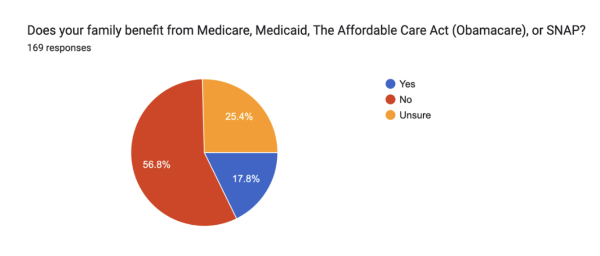
As the expiration date approaches, Upper School students say they are worried about the rising cost of health insurance.
Khadijah Banks ’26 said, “As someone who receives government assistance, I think health insurance is already flawed. For example, prices for ambulances, insulin, and medication that are a necessity [for] living are already sky high and are putting people in debt, and this new change will further enhance these issues and put people in a dangerous place.”
Banks continued, “My nephew has diabetes, and the prices for a vial of insulin are, like, a hundred dollars.” Insulin costs have increased 600% over the last 20 years.
Anberlin Cromley ’28 shared that she has connections to family members and friends who benefit from the ACA, many of whom have disabilities.
Cromley stated that the upcoming change is “very nerve-racking because some people don’t know better,” adding that “some of [her] family members voted against themselves in a way” when it comes to the current administration.
Cromley believes that “if [some people with disabilities] had not voted for [the current president], they would have potentially got help and would be able to live by themselves.”
“I think that everyone has a right to healthcare, and this place, America, is a place where everyone deserves to be equal,” Cromley concluded.
Works Cited
BBC News. “U.S. Government Shutdown Enters Record-Breaking 43rd Day.” BBC, 2025, www.bbc.com/news/articles/crrj1znp0pyo. Accessed 30 Dec. 2025.
Congressional Research Service. The Affordable Care Act (ACA): Overview and Key Issues. R48290, Congress.gov, 2025, www.congress.gov/crs-product/R48290. Accessed 30 Dec. 2025.
Cooper University Health Care. Cooper University Health Care, www.cooperhealth.org. Accessed 30 Dec. 2025.
FactCheck.org. “Competing Claims on Who Benefits from ACA Subsidies.” FactCheck.org, Oct. 2025, www.factcheck.org/2025/10/competing-claims-on-who-benefits-from-aca-subsidies/. Accessed 30 Dec. 2025.
Medicare Rights Center. “Older Adults at Risk If ACA Subsidies Expire.” Medicare Watch, 30 Oct. 2025, www.medicarerights.org/medicare-watch/2025/10/30/older-adults-at-risk-if-aca-subsidies-expire. Accessed 30 Dec. 2025.
NPR. “ACA Subsidies Are Expiring. Here’s What That Means for Health Insurance Costs.” NPR, 15 Dec. 2025, www.npr.org/sections/shots-health-news/2025/12/15/nx-s1-5644978/aca-costs-congress-health-care. Accessed 30 Dec. 2025.
NPR. “Insulin Costs Have Increased More Than 600% Over the Last 20 Years.” NPR, 12 Sept. 2022, www.npr.org/2022/09/12/1122311443/insulin-costs-increased-600-over-the-last-20-years-states-aim-to-curb-the-price. Accessed 30 Dec. 2025.
Politico. “Senators Discuss Potential Extension of Obamacare Subsidies.” Politico, 15 Dec. 2025, www.politico.com/live-updates/2025/12/15/congress/senators-obamacare-extension-talks-00692316. Accessed 30 Dec. 2025.